


"Chapter 51" Q & A Session - in70mm.com EXCLUSIVE | Read more at in70mm.com The 70mm Newsletter |
| Written by: Recorded, condensed, and edited for clarity by Paul Rayton, Hollywood, USA | Date: 29.05.2025 |
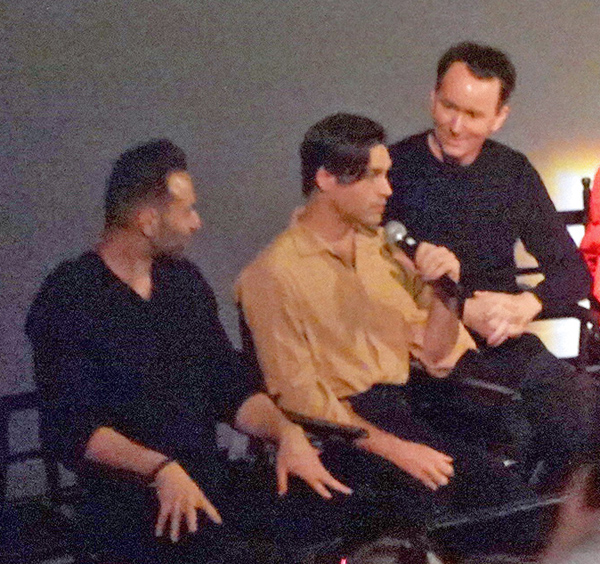 Post LA screening 19. May 2025. Left to right: Monib Abhat, Logan Huffman and Tyler Shields. Picture: Paul Rayton Post LA screening 19. May 2025. Left to right: Monib Abhat, Logan Huffman and Tyler Shields. Picture: Paul RaytonTyler Shields: Many of you know me, but for those who don’t, I'm a photographer. I shoot a lot of crazy pictures. I have always wanted to make a movie, but it's very difficult to do with no money and no people. At least, that was what I thought. Eventually, I had gotten several really amazing cinema lenses and Logan here -- someone who I've been shooting with for 15 years – and on the spur of the moment one day I said, ”…Logan, let's go out and let's shoot something where literally it’s just me and you. I'll do the camera. I'll do the lighting. I'll do the sound. I'll do everything, and you act”. And some of those shots are in this movie! That goes back about eight years ago. When we did that, it gave me an understanding that, OK, depending on the right story, you can make a movie with absolutely nothing. Logan was in Australia during the pandemic. A bunch of my talented friends weren’t working during the pandemic, so I said, “Let’s make something”. So I started calling around. • Go to About "Chapter 51" - in70mm.com EXCLUSIVE • Go to "Chapter 51" Review - in70mm.com EXCLUSIVE Abigail Breslin: Taylor is one of my best friends, and it’s not abnormal for him to text me and be like, “Hey, can you come do a shoot tomorrow?” I was super excited because I always have a good time and everybody up here … I’m just so honored and excited to be able to work with. Audience Question: What did you edit on? Tyler Shields: When I started working on this, there was a sequence that you had to follow: you would shoot, you would get low-res dailies, you would have proxies, you would have all these things. I didn't want to be doing any of that, it's too much work for me, so instead I edited it all using Davinci Resolve, with no proxies. I edited the movie, coloured it in the same system, and then obviously we did all the sound. We did everything, all with Davinci Resolve. I actually started talking to the people at Resolve and asking them to incorporate certain things, which they did. We were making the movie for so long [a time] that those ideas are now in the system. For example, poor Logan here -- he went through 22 hours of audio to find one bit which is in the movie, about 30 seconds of somebody saying something that we needed. Now, the result is that you can do a search like that in 14 seconds. But that's how we edited it – the old fashioned way. Editing this was insane. I think the data total we had was 496 terabytes for the movie. | More in 70mm reading: About "Chapter 51" by Tyler Shields "Chapter 51" - Review - New Imax Movie You'll Probably Never See - in70mm.com EXCLUSIVE VistaVision Visits the TCL Chinese in70mm.com's page about VistaVision in70mm.com's page about IMAX Ultra Panavison 70 in70mm.com News Peripheral Vision, Scopes, Dimensions and Panoramas in70mm.com's Library Presented on the big screen in 7OMM 7OMM and Cinema Across the World Now showing in 70mm in a theatre near you! 70mm Retro - Festivals and Screenings |
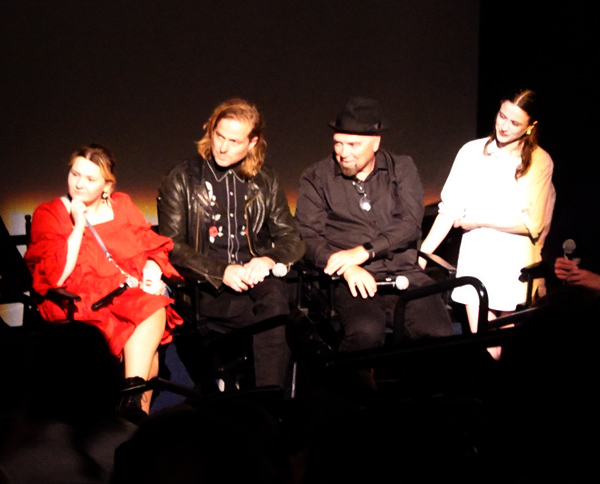 Post LA screening 19. May 2025. Left to right: Abigail Breslin, Neuman Mannas, Rich Cook and Tu Morrow. Picture: Paul Rayton Post LA screening 19. May 2025. Left to right: Abigail Breslin, Neuman Mannas, Rich Cook and Tu Morrow. Picture: Paul RaytonAudience Question: How many days did you shoot? Abigail Breslin: 22 days. Tyler Shields: OK. John, what about you? John Mocker: You know, it's funny for me, all I can remember is the very first day that I shot with Tyler for this movie, my son was the size of a Jelly Bean, and the last day he was 3 1/2 feet tall! [audience laughter] Tyler Shields: Yes, some people were one day, some people were less. I think Andy, was maybe four hours. We never had a day that was more than eight hours long – ever, in the whole movie. And I don't think we shot very many days consecutively because we would shoot, and then go to Giovanni's, we'd scan everything and edit it, and then we'd go back and shoot more. I think it really helped you [to be doing things incrementally]. Audience Question: [What was the biggest surprise?] Tyler Shields: The biggest thing that surprised me, or that I learned, was the ability that sound has to speed up or slow down the narrative of the story. Sound changes their performances. It changes the way that you feel the movie, and I was fortunate to see this movie and edit parts of it and work on it in an IMAX theatre. And the understanding of what sound can do and how it marries [with the picture], that was the biggest thing I learned. The second biggest thing is that lenses inform the character more than anything else. Anyone here an actor? Be shot using the right lenses! It changes everything. You can attest to that, yeah [nods toward Abigail]. But those two things … cause obviously I've photographed a lot of people, but the sound was unbelievable. Bruce kept drilling this into my brain, “You got to do the sound right. You got to get the sound right”. And so once we got the edit finally done and then I saw it with the sound, I saw the movie for the first time. [applause] Audience Question: [What is your favorite shot?] Tyler Shields: My favourite shot always will wind up in the film! [laughs]. No, it's tough because I don't really have a favourite shot because the amount of insane things that we did to pull off a bunch of different shots. Like when we did the murder, you didn't know that you were what was going to happen, that was all real [Tyler addressing actress Abigail Breslin]. Abigail Breslin: He doesn’t tell me anything! Tyler Shields: But then I had these great moments with everyone in the movie. There was this crazy sunset where we did with no light and you could see this purple sky in the back[ground]? That kind of pink-purple sky? That’s one you can only [capture] on IMAX. So we're there, and you have a window to do that, a moment, in which that time is probably 45 to 60 seconds to get that shot [while the lighting is exactly “right”.] | |
 Post LA screening 19. May 2025. Left to right: Todd Mandel and John Mocker. Picture: Paul Rayton Post LA screening 19. May 2025. Left to right: Todd Mandel and John Mocker. Picture: Paul RaytonAudience Question: [How much did the actors know about the story?] Tyler Shields: This is a fun fact. Nobody in the entire movie, except for me, knew what was going to happen. Ever! Rich [Cook] didn't even know he was in a movie. He thought that he was still at my house yelling at people, but no. So I specifically kept as much information from everyone as humanly possible, but I had a full map of it. So I knew where everyone was going to go. Audience Question: [About the score] Tyler Shields: I'm going to throw that over to my friend Neuman [Mannas] here, Neuman did the Score [enthusiastic applause]. Neuman Mannas: I texted Tyler for a year, and was asking “Who is doing the music?”, and he [would reply] “there is someone”. So that's fine, and we did not talk for a long time. Suddenly he goes “Hey, do you want to go watch the movie at IMAX headquarters?”. I go there and I sit right there and Tyler sits right next to me. I don’t know the dude that well at the point. I want to sit at a spot where it will sound good, and so he sits there. I watch the movie. There's music in it, the movie finishes and I go. “God damn, what a good movie you made!” And he goes “I am scrapping all the music”. The edit was done and I watched it, but I didn't even know I had the job yet. Tyler Shields: Neuman you did a great job. Neuman said something to me when we were doing the score “Do you want me to do it fast or do you want me to do it good?” And I said “I want you to do it good”. So it took four months, seven days a week between midnight and 4 am. Every night we worked on the music. I think it came out amazing. Thanks. Then there was a lot of people also in the movie that I want to acknowledge who had never acted before. John Mocker had never acted before. Tom had never acted before. And I think what was exciting about that is they had no idea what they were doing or what the story was, and so therefore they could not say “My character wouldn't do that”, right? They didn't know what their character was, but I think both of you guys did an incredible job. Audience Question: [Are you currently making another secret movie right now?] Tyler Shields: The answer to that is probably always … “No, Yes, I don't know. We'll see. Maybe”. Audience Question: [Were you secretly rolling [the camera] the entire time?] Tyler Shields: Great question. No, we didn't, we did the opposite of keeping the camera rolling. So there's some moments in here where you can see … just at the end of the take where the light will get just a little brighter, or just at the beginning of the take, it'll come in. So with IMAX film, for 1000 feet, you get about 3 minutes and change [of time]. So one day we had shot basically 3 rolls, and out of those 3 rolls, I think 9 minutes and 40 seconds is in the movie. We were so efficient with every single thing. We didn't waste any film. We didn't waste any takes. And the most takes we ever did on anything was four -- in the whole movie. Also I didn't use slates, because I wanted to save the film. | |
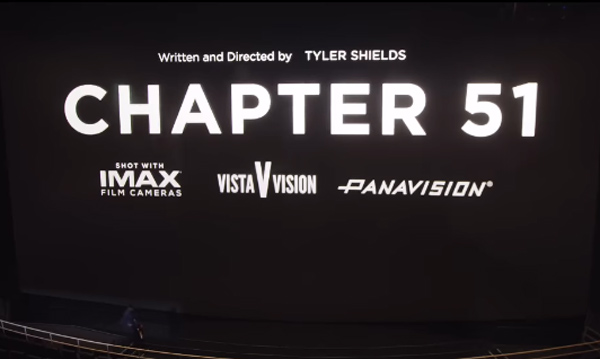 On screen "Chapter 51" title card. Note the extra "v" in VistaVision On screen "Chapter 51" title card. Note the extra "v" in VistaVisionLogan Huffman: I want to say something about I think everybody needs to use [the equipment] like this. [applause] It changes the game with acting, with every element of production, because there is a seriousness and sacredness when you're using this equipment and this film ["Chapter 51"], that it changes the way you perceive what we do. I love it. I wish all I did in the future would just be film because everyone shows up to the set and they say “I'm ready. Let's do this. Let's make magic and not let one second slide”. And we were using equipment that, I mean some were 60 years old. Lenses that were over 100 years old. When you're working with such little minute details and pieces of history, you want to make sure that every single moment is captured and respected. It was such an honor that all of us got to be a part of this. Because we all know that the likelihood of us doing anything like this again is rare and should be honored. Thank you, Tyler. Thank you. For giving us the opportunity. [applause] Tyler Shields: I will say that everyone was so focused, we had the most fun, these sets were the most fun, we were laughing, we were having the best time ever, and the second that the camera turned on, everyone was the best I’ve ever seen them be. And I attribute that a lot to the respect that everyone had for the medium of film. Panavison was just unbelievably [helpful to us]. I mean, I can't thank Laurie, Jim, Amanda and Darcy and everyone at Panavision enough [applause] we have the Ultra [Panavision] 70 in here, which is the original. We used the original “Ben-Hur” lenses from 1959 which I think have been used by us and Tarantino, [-, and "Sinners", ed]. Every time I would go to Panavision and say “I need this different look” it would be like OK, quick and quicker. We shot on the B series lenses, but Logan and the thing was on the T series, and they [had] the C series… Every single thing I wanted to [make a scene] feel different. Giovanni was so obsessed … “Let's just find the craziest lenses we possibly can”! It informs the difference in the character, and helps you create a different movie within the movie. Logan Huffman: How many lenses did we use? Tyler Shields: I was trying to total that up the other day. I want to say we used probably 150 lenses and we used, probably -- if I had to guess -- I'd say we used maybe 20 to 30 different cameras. | |
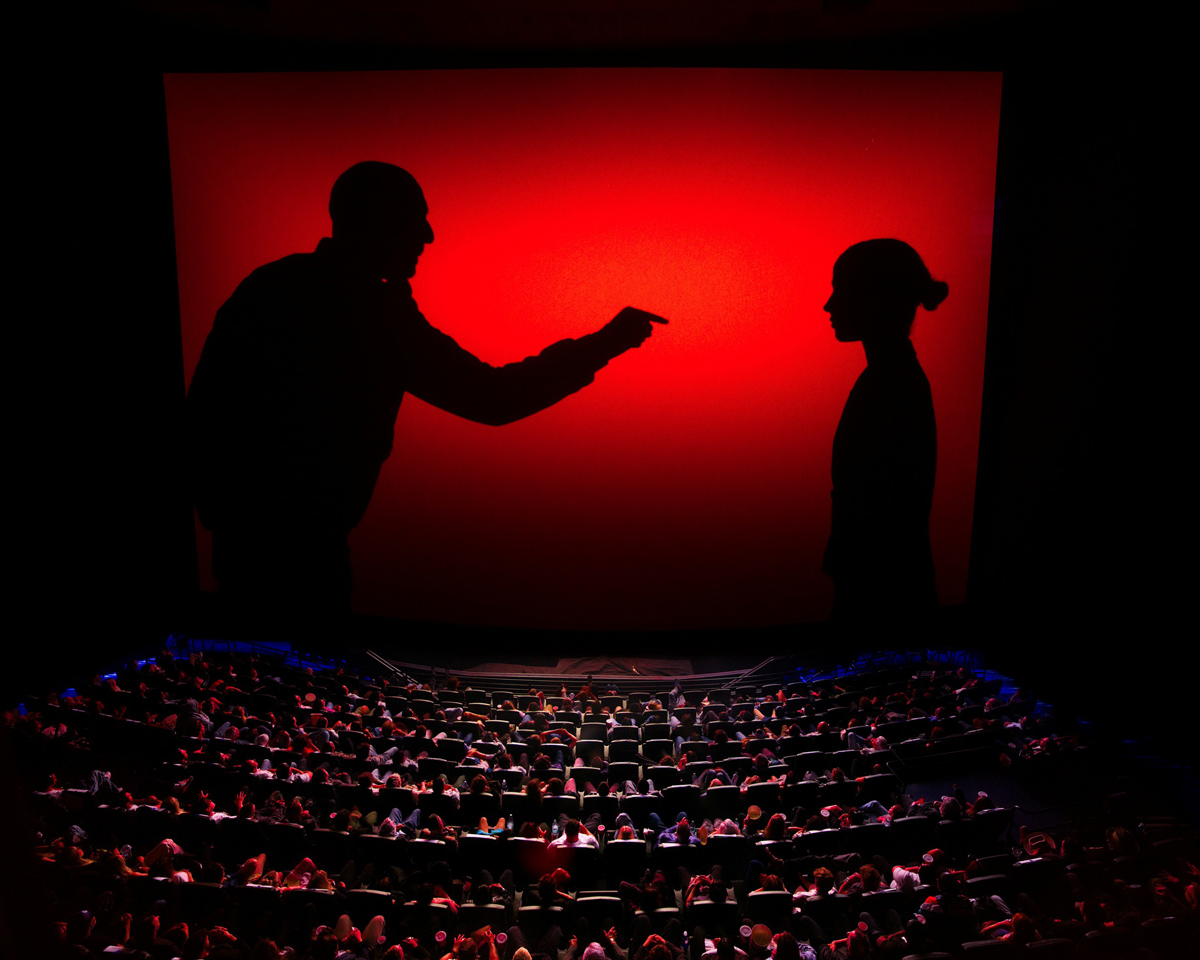 "Chapter 51" seen from the projection room. Picture: Tyler Shields "Chapter 51" seen from the projection room. Picture: Tyler ShieldsAudience Question: [I'm curious if there were any specific references or films that inspired this one? ] Tyler Shields: My understanding of cinema and my love for it, my passion for it, has only grown while making this movie. In the beginning I started researching and trying to understand some of these old movies that I loved, why I loved them and the feeling of them. So why do I want this scene to be black and white versus color? Why do I want this to be like it looks like Technicolor? And so, I mean, my entire life of watching movies has inspired this. And in the beginning I watched a couple of videos and I saw videos from really old directors. I watched Kubrick's editing process and then I saw a video with Christopher Nolan and he said something so brilliant in this video, which was: “Film cameras are cheap. You can buy one and you can make a movie with it”. Now they're not as cheap anymore because they're in high demand now. But at the time they were not that expensive. Then I watched another thing with Tarantino, and he said “Film is the least expensive thing on the set”. And I was like, OK, and then I watched this thing on Kubrick talking about how he did “Barry London”. I started thinking to myself like, OK, we can remove all of the things that you need 100 people for, and we can break it down to where every single person on this stage has carried a camera, a lens, a light, done sound … done everything. So a lot of inspiration came from those people who did it that way in the past. Audience Question: With your experience with all the cameras and lenses in this film you just made, what will you use again? What's your favorite camera? Your favorite lens? Will you make a camera? What did you learn from this? Tyler Shields: You can do things with the IMAX camera that you can't do with any other camera. Nothing compares to it. I don't care if people say it's loud. It's the most perfect camera. There's a shot in there where Moe drives up in the Ferrari, in the middle of the night and there's no lighting there. There's no nothing. That is literally shot in the pitch black at night. You just can't do that on any other camera. So I absolutely love IMAX. I would like to make my next film, the entire thing, every frame on IMAX. If you get great actors, you can do it. Great question. Audience Question: [Favorite scenes?] Tyler Shields: Moe? Take it away! Monib Abhat: Well, first of all, my favorite scene was everything that this gentleman next to me did [motions toward Logan Huffman]. His was just fantastic, fantastic work. But for me it has to be “The Tarantula Prince” [a fictional movie, part of which is shown as a “clip”, part of one sequence in the overall movie – ed.]. I mean, I grew up watching "Spartacus", "Lawrence of Arabia", and that was his homage to those film makers. But also it was him doing me a “solid” [favor]. So thank you. I appreciate that. Logan Huffman: I love “The Tarantula Prince, I think that's the prettiest thing I've ever seen. I love Vaudeville, and very rarely you get to put it [Vaudeville-type action] in to anything. A month before I was to do this part, I was … I live in Australia and I live out in the bush… So there I am, up in a tree. And I fell out of it! I shattered my wrist and … I had one month and I didn't tell Tyler at all, that I broke my wrist. Because this was my dream Tyler was saying “we have Charlie Chaplin's crank camera. You got to go do it!”, and I just practiced with a broken hand. And we did it in the second take, which was good. I think that was just the biggest honor to be able to shoot on a crank camera and these people try to emulate it. You only get that look on film from doing it, so it was just cool. Abigail Breslin: What I noticed tonight was the music. The score is genuinely incredible and makes you feel so much in the silent moments. And so that's what tonight I realized was my favorite moment. | |
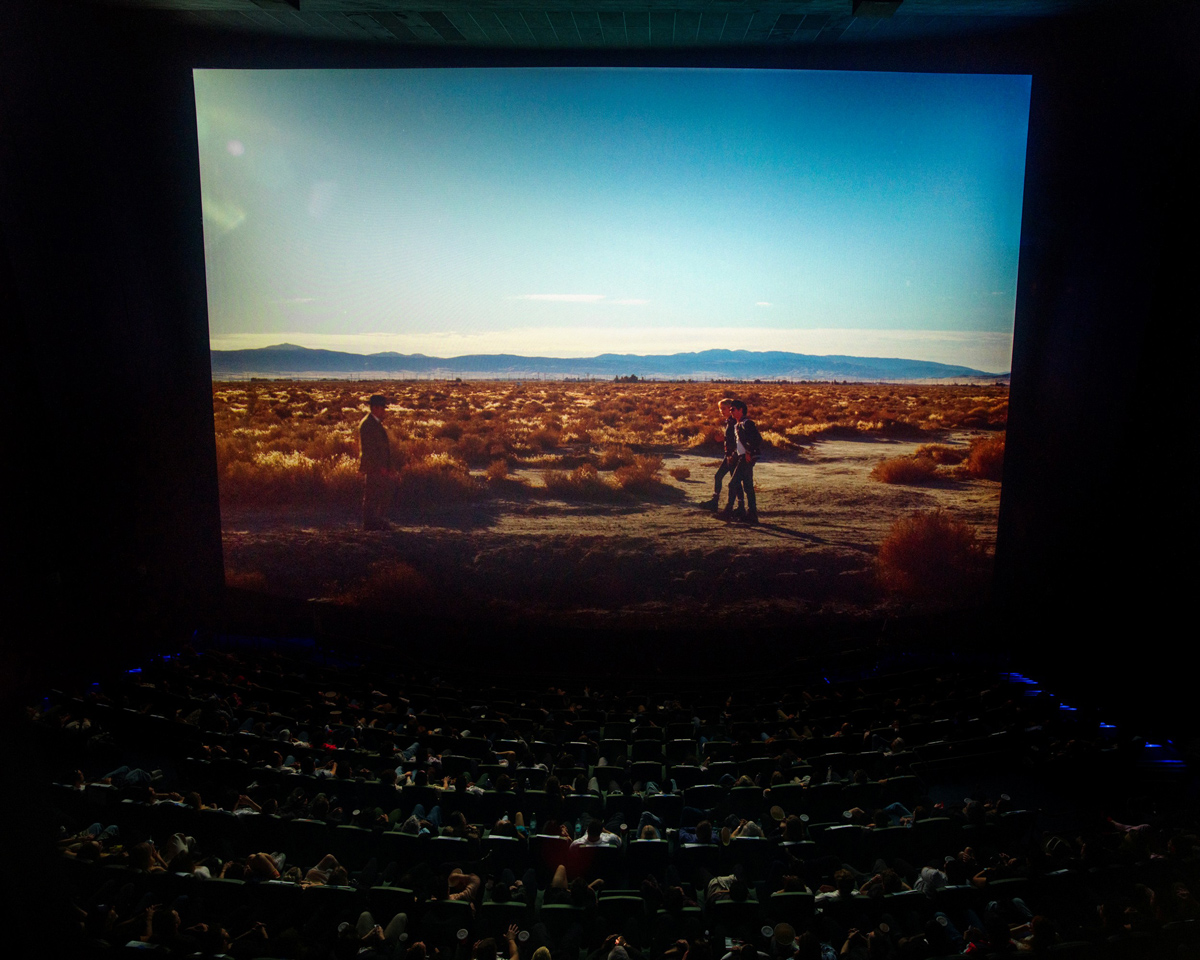 "Chapter 51" seen from the projection room. Picture: Tyler Shields "Chapter 51" seen from the projection room. Picture: Tyler ShieldsRich Cook: When we did this VistaVision shot under the bridge, that was cool. Tu Morrow: I think one of my favorite memories was a scene that's not in the film, but it was between Abby Connor and myself. It was very interesting because, as you've been hearing, we're learning what we were doing in the moment of the day, or the moment we're on set. Tyler pulled everyone aside, and he came up to me and he said, “…she, Abby, is going to ask you a question. You're going to say ‘no’, but you're lying”. Then he started to walk away and I said, “Wait, do you want to know I'm lying, or do you want to believe me?” “Just say it”, and he walked away [audience laugh]. It was such a fun exercise as an actor and learning how to dance with these cameras that I had yet to partner up with before. It was really beautiful, and you're pretty cool. Todd Mandel: Mine was definitely my walking scene because it was the first Imax shot for me that I got to do“ John Mocker: Oh, definitely the desert. The little kiss. Tyler said, “here’s what I want you to do”, but he didn’t tell Dylan anything. He said “I want you to go up and… and he [Dylan] was very surprised!” But anyhow it was a lot of fun and I cherished every minute and working with Tyler and this crew was amazing. Yeah. [applause] Audience Question: How did the VistaVision scene come to be? Tyler Shields: While we were making this movie, I was having lunch with Jim, Laurie and Amanda from Panavision. And we're talking about something we were going to do and I said “I had this craziest dream last night. I had a dream that I bought a VistaVision camera”. And Jim looked at me, with this crazy look on his face, and he says “I can get you one right now”. And, mind you, there's only six to eight of these cameras in the whole world. And so by the end of that lunch I had bought a VistaVision camera! It was so funny because, I told people that story, and they say “Is that true”? But Jim [addressing Jim], you can attest to the fact that that's right. That was the Kismet thing of this movie. It was “Oh, let's shoot IMAX”. And then we did IMAX. Then I had this dream about VistaVision. Or I want to do this lens or the hand crank or everything that we thought of ... just kind of happened, and it was really beautiful the way it happened. | |
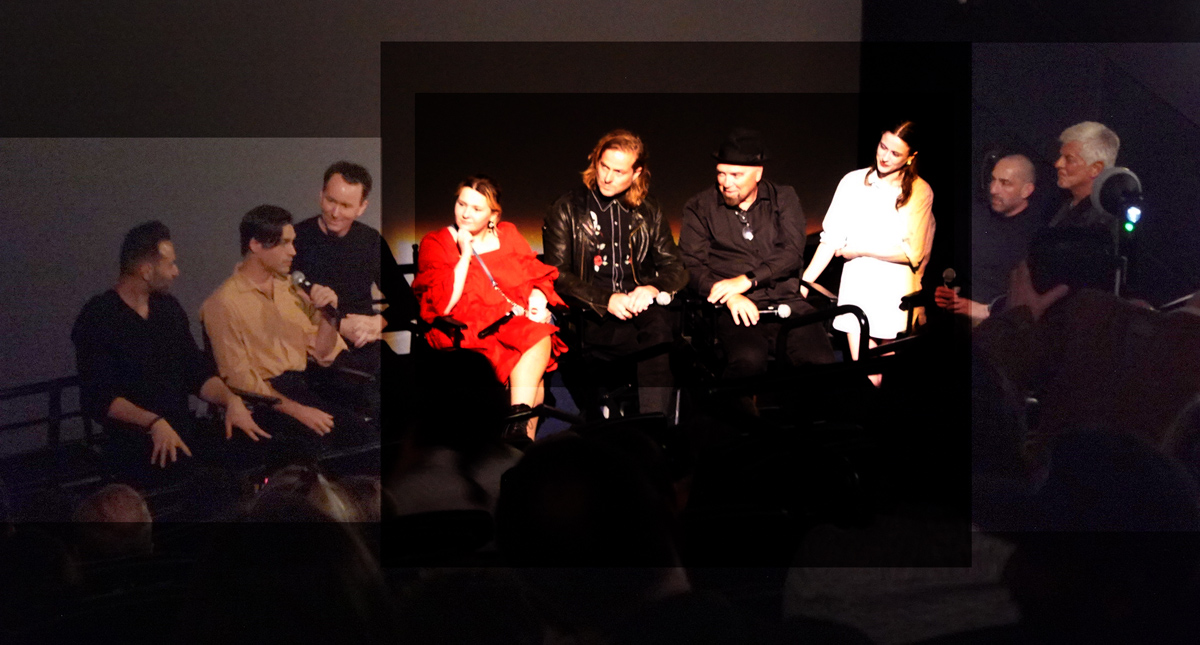 Post LA screening 19. May 2025. Left to right: Monib Abhat, Logan Huffman, Tyler Shields, Abigail Breslin, Neuman Mannas, Rich Cook, Tu Morrow, Todd Mandel, John Mocker. Picture: Paul Rayton Post LA screening 19. May 2025. Left to right: Monib Abhat, Logan Huffman, Tyler Shields, Abigail Breslin, Neuman Mannas, Rich Cook, Tu Morrow, Todd Mandel, John Mocker. Picture: Paul RaytonAudience Question: I'm just really curious about the process. I'm filmmaker myself and when you said that the actors did not necessarily know a lot. I think that's a beautiful thing. That's very unique and I've never done that. And I'm just curious because the process was so long for four years. So technically you have the power to change the vision and also even like after two years, did you ever make use of that power or did you ever make any major shifts and nobody really knew about it because it's all up to you? Tyler Shields: No, I mean, I knew the whole time where I wanted them to end up, whether they did or not, I don't know. But I kind of knew the way I wanted them all to be. But I watched them all grow. I watched them all become better actors, as we were going on and on, and everyone got used to working with these cameras. In the beginning, it's like, “OK, we're shooting on film! This is crazy!”. And then by the end, it's like, “Oh, cool, we're going to have two IMAX Cameras. Or an airplane is going to come out and then a helicopter's going to fly”. And so they were all very acclimated to it. But I don't know of anyone that's ever made a movie with this process. I mean, I'm sure that I'm sure somebody has – people have done everything. But the way that we did it and the way that they all trusted me ... I'm actually going to have Moe tell you about our text exchange, and this will tell you how all these people are. Pretty much everyone I asked to be in this movie just said “tell me what time to be there” and they didn't ask a lot of questions. They just trusted me. And that -- I will take the trust of these people over the biggest actors in the world, because what they will do, and putting that trust into me is how you're able to get the performances that you get. Because it is scary for people to go in and not know what the character is going to be, not know where they end up. But they trust me and that's why it worked, in my opinion. So Moe -- I mean you're the great example of this. Do you remember the text? Monib Abhat: Yeah, I think it was February 2021. And I just got a text message from Tyler and it literally just said, “Hey, I'm doing a thing and I want you in it”. And then I said, “when do we start?” And I think it's a testament, because I think being part of this project with all these amazing human beings, it really showed me what it could be like when you are part of something that … there's really no egos involved, there's no pride, everyone's gunning for the same thing, which is to just make something that everyone told him that he couldn't do. And so we all had the same goal and we just led with love. We led with appreciation, we led with trust. I just think it was a really beautiful thing. And for any filmmaker or anyone that's aspiring to be a filmmaker, actor or writer, whatever it is that you are, this is a testament because this man, I've been his friend. I've worked on this for four years, but he's been a dear friend of mine for 10. He's been told “No” more times than I've been rejected in auditions. It just it was so beautiful for him to just take everything in his own hands and so, for all of you who were inspired or want to do something like this this is a testament that like he, you can do it, right? I mean, to be able to do what he did with the resources that he had because of who he is, right? I don't think IMAX is going to, you know, lend out any, any cameras to anyone. But that's just a testament of who you are, and that's really a mission for everyone else to like, hey, if you really want to do something, don't wait for someone to say “Yes”, just go out and do it. [wild audience applause] | |
 • Go to "Chapter 51" Q & A Session - in70mm.com EXCLUSIVE | |
| Go: back - top - news - back issues Updated 29-05-25 |